 CrownPeak Roofing
Leadwork & Flashing in Reading
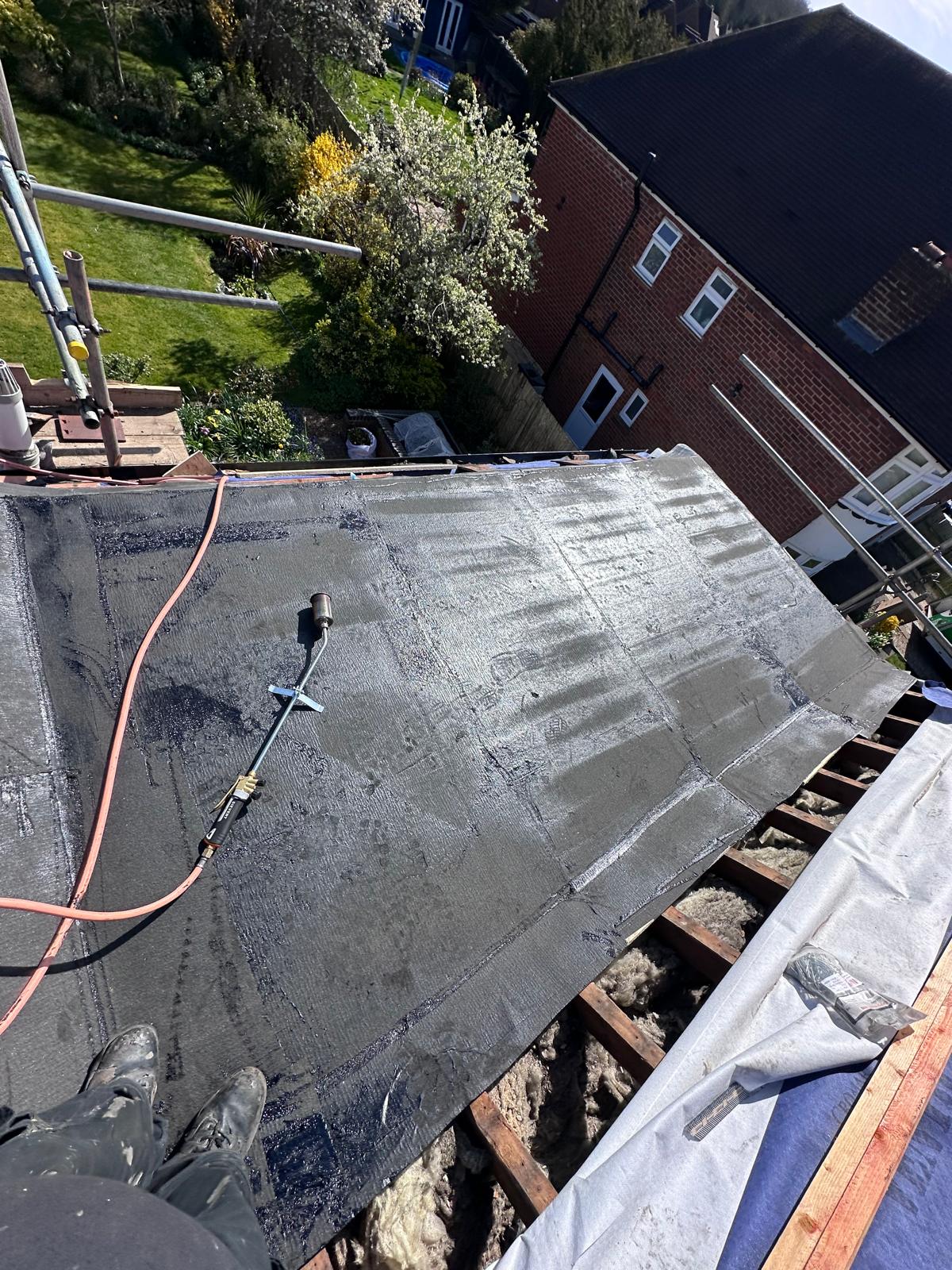
Specialist Lead Roofing and Flashing Services in Reading
CrownPeak Roofing offers expert leadwork and flashing services across Reading. Lead is the most durable and weather-resistant material for sealing roof junctions, valleys, and abutments — and when installed correctly, quality leadwork lasts 100+ years. Our skilled team repairs and replaces all types of lead flashing across RG1, RG2, RG4, RG6, RG30, RG31 postcodes, from chimney aprons on period homes in Caversham to valley gutters on 1930s properties in Tilehurst.
Faulty or deteriorating lead flashing is one of the most common causes of roof leaks in Reading. The signs are often subtle — a small damp patch on an upstairs wall, water staining around a chimney breast, or moisture appearing where an extension meets the main roof. From Victorian terraces in central Reading to 1930s semis in Caversham and modern estates in Lower Earley — and every junction where roof meets wall, chimney, or dormer relies on properly installed leadwork to keep water out.
Why Quality Leadwork Matters for Reading Properties
Lead flashing fails for several reasons: thermal movement causes fatigue cracking over decades, mortar chase fillings shrink and crack allowing water behind the lead, and poorly fitted lead lifts in high winds. In Reading, properties in exposed areas like Earley and Woodley are particularly vulnerable to wind-driven rain exploiting even small gaps in deteriorating flashings.
We use only BS EN 12588 code 4 and code 5 milled lead sheet — never lead-effect alternatives. Proper lead, correctly dressed and fixed, will outlast the roof it's protecting. Our flashings are installed with expansion joints at maximum 1.5m centres to prevent thermal fatigue cracking.
Leadwork Services We Provide
- Step flashing replacement and renewal
- Chimney apron and back gutter leadwork
- Valley gutter lining and replacement
- Flat roof lead detailing and edge trims
- Dormer window cheek cladding
- Parapet wall cappings
- Bay window roof leadwork
- Abutment flashings (wall-to-roof junctions)
- Code 4 and Code 5 milled lead supply and fit
- Emergency lead flashing repairs
Why Choose CrownPeak in Reading
- Reaching Reading within 25 minutes
- Skilled lead workers with 15+ years' experience
- Only genuine milled lead sheet — BS EN 12588
- Flashings guaranteed for 25+ years
- Free roof and flashing inspection
- Fully insured to £5 million
Common Flashing Problems in Reading Homes
The most frequent leadwork issue we see in Reading is cracked or lifted step flashing where a roof slope meets a wall — particularly common on two-storey extensions and side returns. In older Caversham and Tilehurst properties, the original lead may have fatigued after 60+ years of thermal expansion and contraction, developing hairline cracks that let water through gradually.
Another widespread problem in Reading is cement fillets used as a cheap alternative to lead flashing. Cement is rigid and cracks as the building moves, inevitably allowing water penetration. If your property has cement fillets rather than lead flashings, replacing them with properly installed lead is one of the best investments you can make in your roof's longevity.
Our Leadwork Process in Reading
Quality leadwork starts with precise measurement and specification. For every Reading flashing job, we begin by photographing and measuring the existing installation, identifying the failure points, and specifying the correct lead code and dimensions. Code 4 lead (1.8mm) is used for standard flashings and stepped details; code 5 (2.24mm) for valley gutters and flat sections subject to foot traffic. We never take shortcuts with specification — undersized lead is the most common cause of premature flashing failure.
Installation follows the Lead Sheet Association best-practice guidelines. We form the lead on-site using traditional bossing techniques — hand-working the lead into shape without cutting wherever possible. All joints are properly lapped and sealed, expansion joints are spaced at maximum 1.5m centres, and chase mortaring is done with a flexible sealant backing to prevent the rigid mortar bond that causes so many flashing failures. Our Reading customers receive a 25-year guarantee on all leadwork because we trust our installation methods completely.
Leadwork & Flashing Costs in Reading — What to Expect
Lead flashing costs in Reading depend on the type of junction and the length of flashing required. Chimney step flashing replacement typically is competitively priced. Chimney back gutter renewal runs competitive rates. We itemise every quote so you can see exactly what you are paying for — lead, fixings, scaffolding, and labour are all listed separately.
While lead is more expensive than cement fillets or modern alternatives like self-adhesive flashing tape, the lifetime cost is dramatically lower. A properly installed lead flashing will last 80-100 years without maintenance. Cement fillets crack within 5-15 years. Self-adhesive products have a maximum lifespan of 15-20 years. For Reading homeowners planning to stay in their property or wanting to protect its value, genuine leadwork is always the best investment.
When to Call for Lead Flashing Repairs in Reading
Lead flashing problems often reveal themselves subtly. The most common sign is a damp patch on an internal wall, typically where an extension meets the main house, around a chimney breast, or below a dormer window. In Reading, we find that many homeowners have been told the issue is just condensation when it is actually a failed flashing allowing rainwater into the wall cavity. If the damp patch worsens during or after heavy rain, it is almost certainly a flashing problem.
Other signs to watch for include: lead lifting or curling away from a wall (visible from ground level on many Reading properties), green or white staining below a lead detail indicating water is running behind it, cracked or missing mortar in the chase line where lead is tucked into brickwork, and any visible daylight when looking up from inside the loft at a wall-to-roof junction. If you spot any of these on your Reading property, call us before the next period of wet weather.
Local Reading Leadwork Expertise
Every era of Reading housing presents different leadwork challenges. Georgian and Victorian properties in Caversham and Tilehurst often retain original lead that has served well for over a century but may now have fatigue cracks from over 100 years of thermal cycling. These properties require careful removal and replacement with matching weight lead, respecting the building character and often working within conservation area guidelines.
Homes built between 1950 and 1990 across Woodley, Whitley, and Southcote were frequently constructed with cement fillets instead of lead — a cost-saving measure during the post-war building boom. These cement fillets have an expected lifespan of just 10-20 years and virtually all of them have now failed or are in the process of failing. Replacing cement fillets with proper lead flashings on these Reading properties is one of the most common and worthwhile jobs we carry out — it permanently resolves leak problems that patching can never fix.
Lead vs Alternatives — Why Lead Is Still the Best Choice for Reading Roofs
Modern roofing suppliers offer various alternatives to traditional lead: self-adhesive flashing strips, GRP (fibreglass) moulded flashings, and zinc or aluminium sheet. While these products have niche applications, none match lead performance for mainstream roofing junctions. Lead is malleable enough to be dressed perfectly into complex shapes, dense enough to resist wind uplift, and durable enough to last over a century. No alternative offers this combination of workability, durability, and weather resistance.
For Reading properties in particular, where housing stock spans from Georgian to modern and roof geometries vary enormously, lead versatility is essential. Self-adhesive strips cannot form the complex three-dimensional shapes needed at chimney-to-roof junctions. GRP mouldings only fit specific standard configurations. Zinc and aluminium lack lead malleability and cannot be effectively bossed on site. When you choose CrownPeak for leadwork in Reading, you are choosing the material and the expertise that will outlast every alternative.
Professional Leadwork in Reading — Built to Last
Genuine milled lead, expert installation. Call for a free Reading flashing assessment.
Leadwork & Flashing in Reading — Your Questions Answered
We provide detailed quotes after a free inspection of your Reading property. Contact us on 07345 789396 for a free, no-obligation quote tailored to your specific requirements.
Quality milled lead flashing, correctly installed with appropriate expansion joints, will last 80-100+ years. The lead on many Reading period properties is still the original Victorian or Edwardian installation. Modern code 4 lead with proper fixings should comfortably outlast the roof covering beneath it.
Code 4 lead is 1.8mm thick and suitable for most flashings, step details, and soakers. Code 5 is 2.24mm thick and used for valley gutters, flat roof detailing, and areas subject to foot traffic. We specify the correct code for each application — using lead that's too thin risks fatigue cracking, while unnecessarily heavy lead wastes money.
Minor cracks can sometimes be dressed and sealed as a temporary measure, but we generally recommend full replacement if the lead has fatigued. A properly replaced lead flashing will last decades; a patched one may fail again within a few years. For Reading properties, we'll always advise the most cost-effective long-term solution.
Lead is malleable, waterproof, and moves with the building. Cement is rigid, porous, and cracks as the structure expands and contracts with temperature changes. Every cement fillet will eventually fail. Lead flashings, properly installed, will outlast the building. We strongly recommend replacing cement fillets with lead for any Reading property.
Yes. If you have an active leak caused by failed or storm-damaged flashing, we can usually attend your Reading property within 24 hours. Our emergency response includes a temporary weatherproof seal to stop the leak immediately, followed by a permanent lead flashing repair or replacement scheduled at the earliest convenient date. Emergency call-outs are charged at our standard rates with no premium.
Lead flashings have a distinctive dull grey appearance and are smooth, slightly soft to the touch. They sit in a neat chase line cut into the brickwork. Cement fillets look like a rigid triangular bead of mortar running along the wall-to-roof junction — they are rough-textured and often show hairline cracks. If you are unsure, send us a photograph and we will identify your flashing type and advise on its condition free of charge.
Lead roofing sheet is completely safe in normal use. The lead is in solid metallic form, not dust or fumes, and poses no health risk to occupants. It does not leach into rainwater in quantities that affect health. Lead has been used in roofing for over 2,000 years and remains the material of choice recommended by the Lead Sheet Association, English Heritage, and all major roofing bodies.
Verified Reviews

“Our bay window lead roof was failing. CrownPeak stripped it, re-boarded it, and laid new code-4 lead. Beautiful, watertight finish.”

“Had lead valleys replaced on our old cottage. CrownPeak sourced the right grade of lead and dressed it beautifully. No more leaks.”

“CrownPeak fitted lead hip and ridge flashings on our new extension roof. The joins to the main house are seamless. Quality craftsmanship.”
Areas We Cover in Reading
We provide leadwork & flashing services across every neighbourhood in Reading and surrounding areas. No matter where you are in the RG1, RG2, RG4, RG6, RG30, RG31 postcode areas, our local team can reach you quickly.